
Assertiveness & Communication: Expressing Yourself Clearly and Confidently
Communication is at the heart of professional life. It influences the quality of relationships, collaboration, trust, conflict management, and the ability to move projects forward.
Yet expressing ourselves clearly is not always easy. Fear of conflict, judgment, or disagreement often prevents people from sharing their opinions, communicating their needs, or setting healthy boundaries. Others may become overly direct when under pressure or experiencing strong emotions.
Being assertive does not mean imposing your views or avoiding difficult conversations. It means expressing your ideas, needs, and boundaries with clarity, respect, and confidence.
Coaching provides a space for reflection and practice, helping individuals develop more authentic, effective, and confident communication.
Why Is Communication So Important at Work?
Effective communication directly contributes to both individual and team performance.
It helps to:
- clarify expectations and responsibilities;
- prevent misunderstandings;
- strengthen collaboration;
- support decision-making;
- resolve disagreements more effectively;
- build trust;
- improve engagement and motivation.
Conversely, poor communication can create tension, frustration, confusion, and long-lasting conflicts.
Strong communication skills are therefore essential at every level of an organization.
Nonviolent Communication: Communicating Without Blame or Judgment
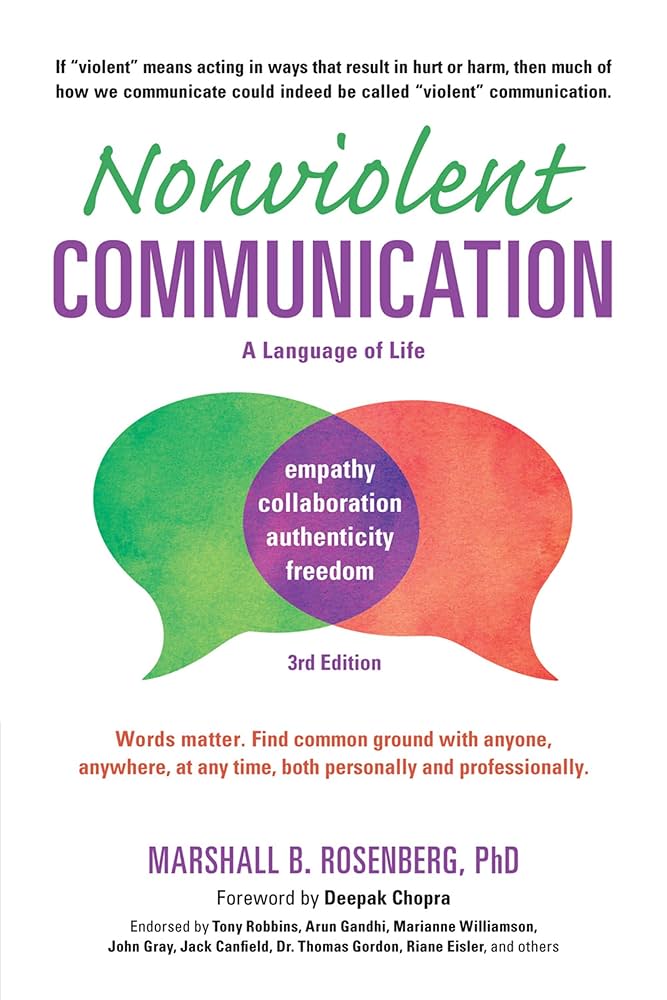
Nonviolent Communication (NVC), developed by American psychologist Marshall Rosenberg in the 1960s, is a relationship-centered approach designed to foster respectful and constructive dialogue.
Its goal is not to avoid disagreement, but to express concerns without criticism, blame, or hostility.
NVC encourages individuals to distinguish between:
- observable facts;
- emotions and feelings;
- underlying needs;
- clear requests made to others.
This approach helps people express what matters to them while remaining attentive to the perspectives of others.
Today, NVC is widely recognized as a valuable framework for improving workplace relationships, reducing conflict, and building stronger teams.
Why Learn to Be Assertive?
Assertiveness helps individuals find a healthy balance between passivity and confrontation.
Developing this skill can help you:
- express disagreement respectfully;
- communicate requests clearly;
- say no when necessary;
- defend your ideas with confidence;
- manage difficult situations more effectively;
- establish healthy professional boundaries;
- strengthen your credibility and leadership presence.
Being assertive does not mean always being right. It means communicating honestly, clearly, and respectfully, even in challenging situations.
How Coaching Can Help
Coaching does not provide scripted responses. Instead, it helps you understand your communication patterns and develop a more confident and authentic approach.
Coaching can help you:
- identify communication barriers;
- recognize relationship patterns;
- build confidence in important conversations;
- strengthen assertiveness skills;
- manage emotions more effectively;
- prepare for difficult discussions;
- improve listening and presence;
- increase your professional and interpersonal impact.
Coaching is particularly valuable when communication becomes a source of stress, misunderstanding, or frustration.
Sonia: Finding Her Voice
Sonia is a project manager. She is competent and respected by her colleagues, yet she faces a recurring challenge: expressing disagreement.
During meetings, she often keeps her concerns to herself. When she believes a decision may not be appropriate, she hesitates to speak up. She also tends to accept additional work even when her workload is already significant.
Over time, this pattern leads to frustration, stress, and a feeling that her contributions are not fully recognized.
Her coaching question is clear:
How can I express my opinions without creating tension or feeling guilty?
Through coaching, Sonia becomes aware of limiting beliefs, including the assumption that disagreement could damage relationships.
She learns to separate facts from interpretations, express her needs more clearly, and apply the principles of Nonviolent Communication when preparing for sensitive conversations.
Gradually, Sonia becomes more comfortable speaking up, expressing expectations, and setting healthy boundaries.
Her professional relationships improve, her communication becomes clearer, and her confidence grows.
She has not become more authoritative. She has simply learned to communicate more authentically.
Turning Communication into a Success Factor
The quality of our relationships largely depends on our ability to communicate with clarity, respect, and genuine listening.
Developing assertiveness helps us make our voices heard while building healthier and more authentic professional relationships.
Coaching provides a powerful opportunity to strengthen this essential skill and feel more comfortable in high-stakes situations.
AFIACOACH supports individuals and professionals who want to improve communication, strengthen assertiveness, and find their place with confidence in professional relationships.
Do you sometimes struggle to express your opinions, set boundaries, or handle difficult conversations? Let’s explore your communication style together and develop a more confident, authentic, and impactful way of communicating.