

Work-Life Balance: Taking Back Control of Your Time
Achieving a healthy balance between professional and personal life has become a major challenge for managers, executives, entrepreneurs, and professionals. Constant demands, endless meetings, heavy workloads, digital overload, and high-performance expectations can gradually blur the boundaries between work and personal life.
However, achieving balance is not about working less. It is about focusing your time and energy on what truly matters.
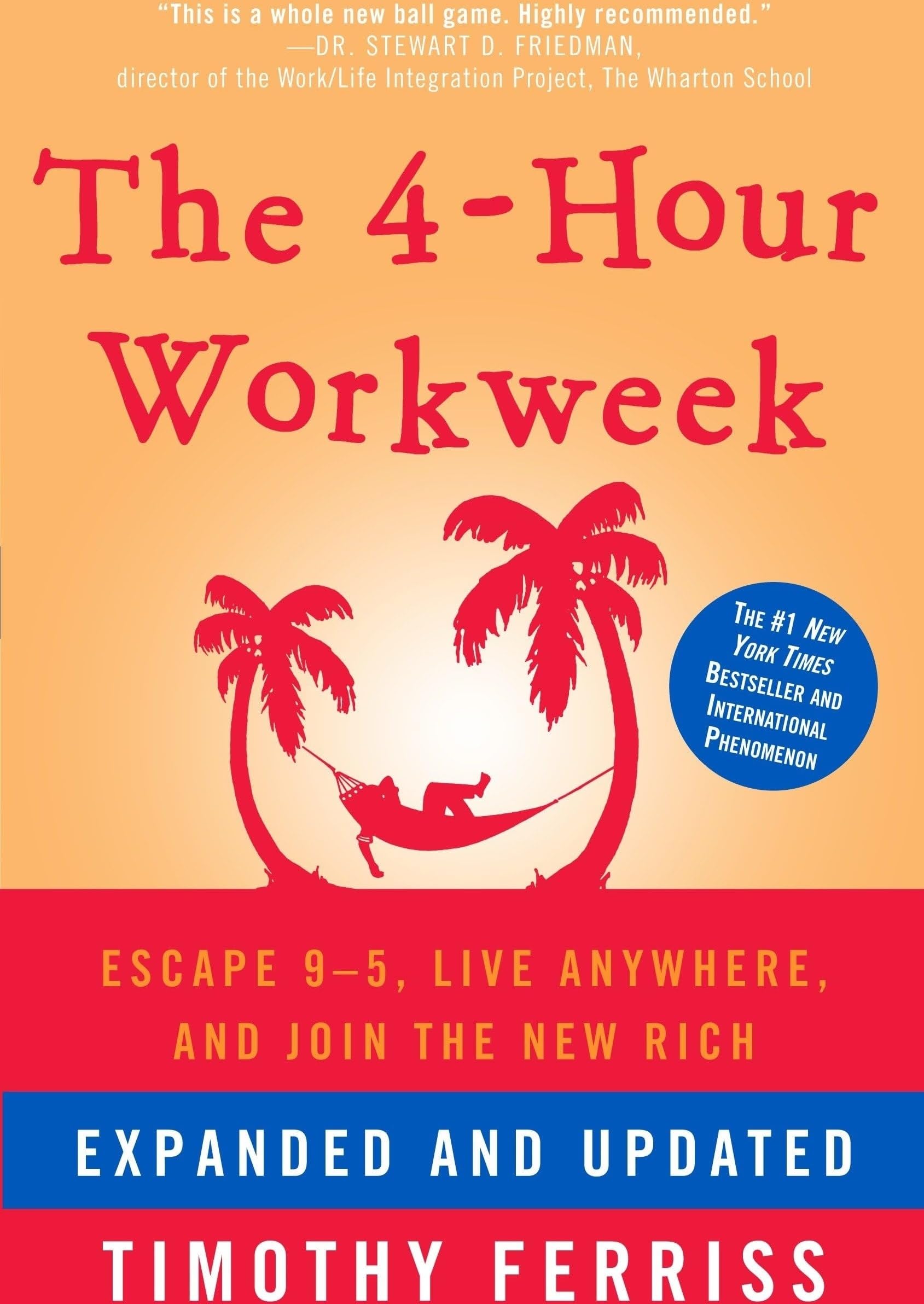
In his bestselling book The 4-Hour Workweek, Timothy Ferriss encourages readers to challenge traditional assumptions about productivity and focus on effectiveness rather than simply working longer hours.
Executive coaching provides a space for reflection and action, helping individuals regain control of their time, clarify their priorities, and create a sustainable balance.
Why Is Work-Life Balance So Important?
When work takes up too much space, the consequences often appear gradually:
- chronic fatigue;
- mental overload;
- reduced concentration;
- family tensions;
- loss of motivation;
- the feeling of never having enough time;
- increased risk of burnout.
On the other hand, a healthier balance can help you:
- preserve your energy over the long term;
- improve your quality of life;
- increase professional effectiveness;
- manage stress more effectively;
- gain perspective;
- strengthen personal and professional relationships.
The goal is not to create a perfect balance but to build a lifestyle that reflects your priorities and values.
Rethinking Your Relationship with Time
In The 4-Hour Workweek, Timothy Ferriss emphasizes that productivity is not measured by the number of hours worked but by the value created.
This perspective encourages individuals to:
- identify high-value activities;
- eliminate unnecessary tasks;
- reduce constant interruptions;
- simplify work habits;
- focus on results rather than time spent.
The real challenge is often not a lack of time but the difficulty of making choices and protecting priorities.
The Eisenhower Matrix: A Tool for Better Priority Management
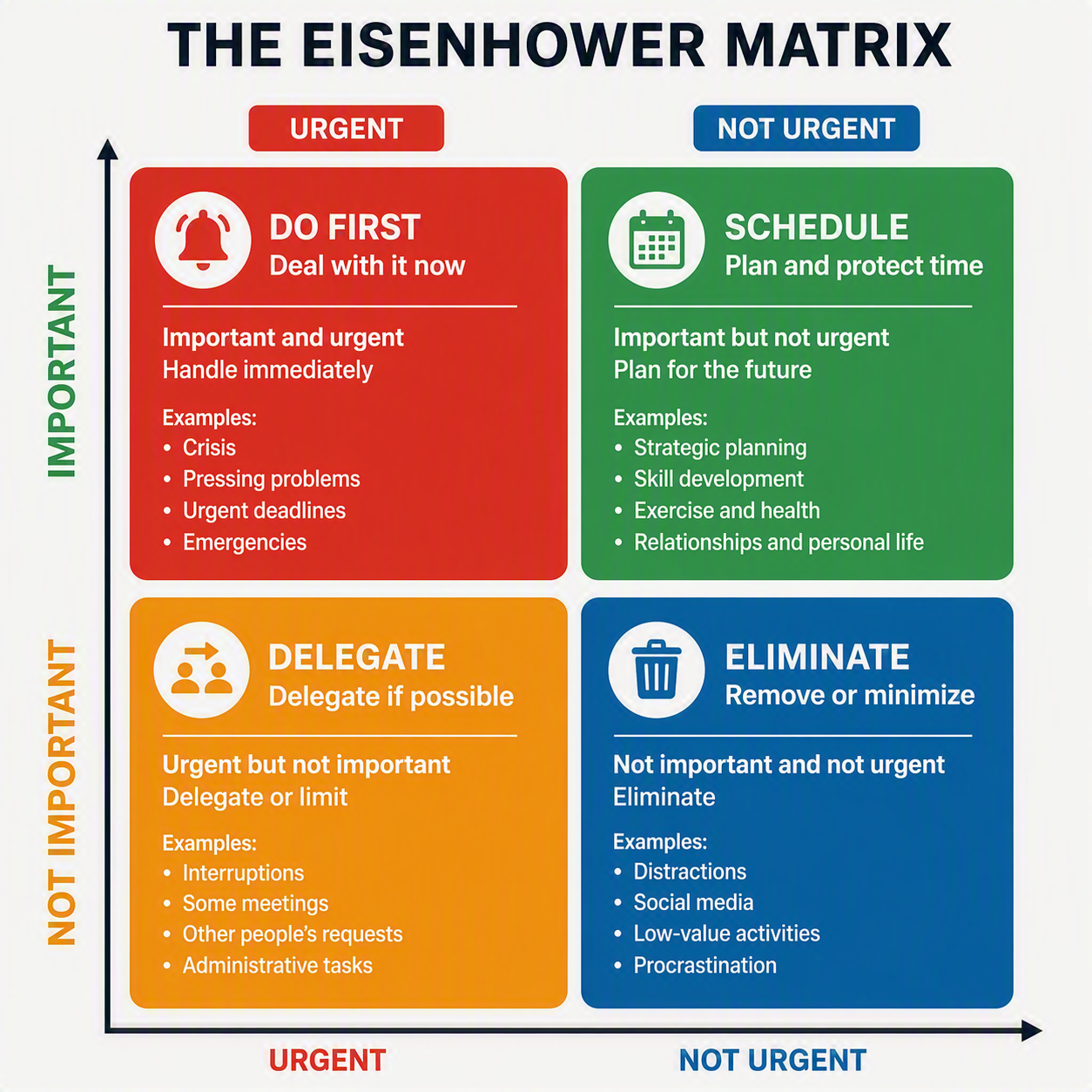
The Eisenhower Matrix helps categorize tasks into four groups:
- Important and urgent: tasks requiring immediate action.
- Important but not urgent: activities that contribute to long-term goals, health, relationships, personal growth, and strategic thinking.
- Urgent but not important: requests and demands that can often be delegated or streamlined.
- Neither urgent nor important: low-value activities that consume time without contributing to meaningful goals.
Many professionals spend too much energy responding to urgent matters and not enough on what is truly important.
Learning to protect important but non-urgent activities is often one of the most powerful ways to create a healthier balance.
How Executive Coaching Can Help
Executive coaching does not provide a one-size-fits-all time management solution. Instead, it helps individuals understand the behaviors that create overload and develop strategies adapted to their professional reality.
Coaching can help you:
- clarify personal and professional priorities;
- identify sources of distraction;
- improve time management;
- delegate more effectively;
- manage interruptions and demands;
- strengthen your ability to say no;
- make time for important activities;
- create a healthier balance between performance and well-being.
Coaching is particularly valuable when professional success seems to come at the expense of personal fulfillment.
Jamal: Taking Back Control of His Schedule
Jamal is the director of a department with several dozen team members. Passionate about his work, he is deeply committed to his responsibilities and constantly seeks to support his teams.
Over the years, his days gradually fill with meetings, emails, operational emergencies, and various requests. He regularly works early in the morning, continues in the evening, and still checks his messages on weekends.
Despite his commitment, he feels he never makes enough progress on the strategic topics that truly matter.
His coaching question is clear:
How can I succeed professionally without sacrificing my personal life?
Through coaching, Jamal realizes that a large part of his time is absorbed by urgent but unimportant tasks.
Using the Eisenhower Matrix, he learns to distinguish true priorities, delegate certain activities, and reserve dedicated time for strategic topics as well as his personal life.
He also works on his beliefs about performance, including the idea that his constant availability is essential to his team’s success.
Gradually, Jamal regains greater control over his schedule. He reduces some sources of overload, improves his organization, and gives more space to his family, his health, and his personal projects.
His professional results remain strong, but his energy level and quality of life improve significantly.
Making Your Priorities a Conscious Choice
Work-life balance does not happen by chance. It is built through daily choices, the boundaries we set, and the priorities we decide to protect.
Developing this ability not only helps preserve well-being, but also strengthens performance over the long term.
Executive coaching offers structured support to step back, clarify priorities, and build a way of working more aligned with your goals and values.
AFIACOACH supports individuals, managers, executives, and entrepreneurs who want to regain control of their time, manage their priorities more effectively, and build a lasting balance between professional success and personal fulfillment.
Do you feel that work is taking more and more space in your personal life? Let’s identify what truly matters to you and build a sustainable balance that supports both your performance and your well-being.