

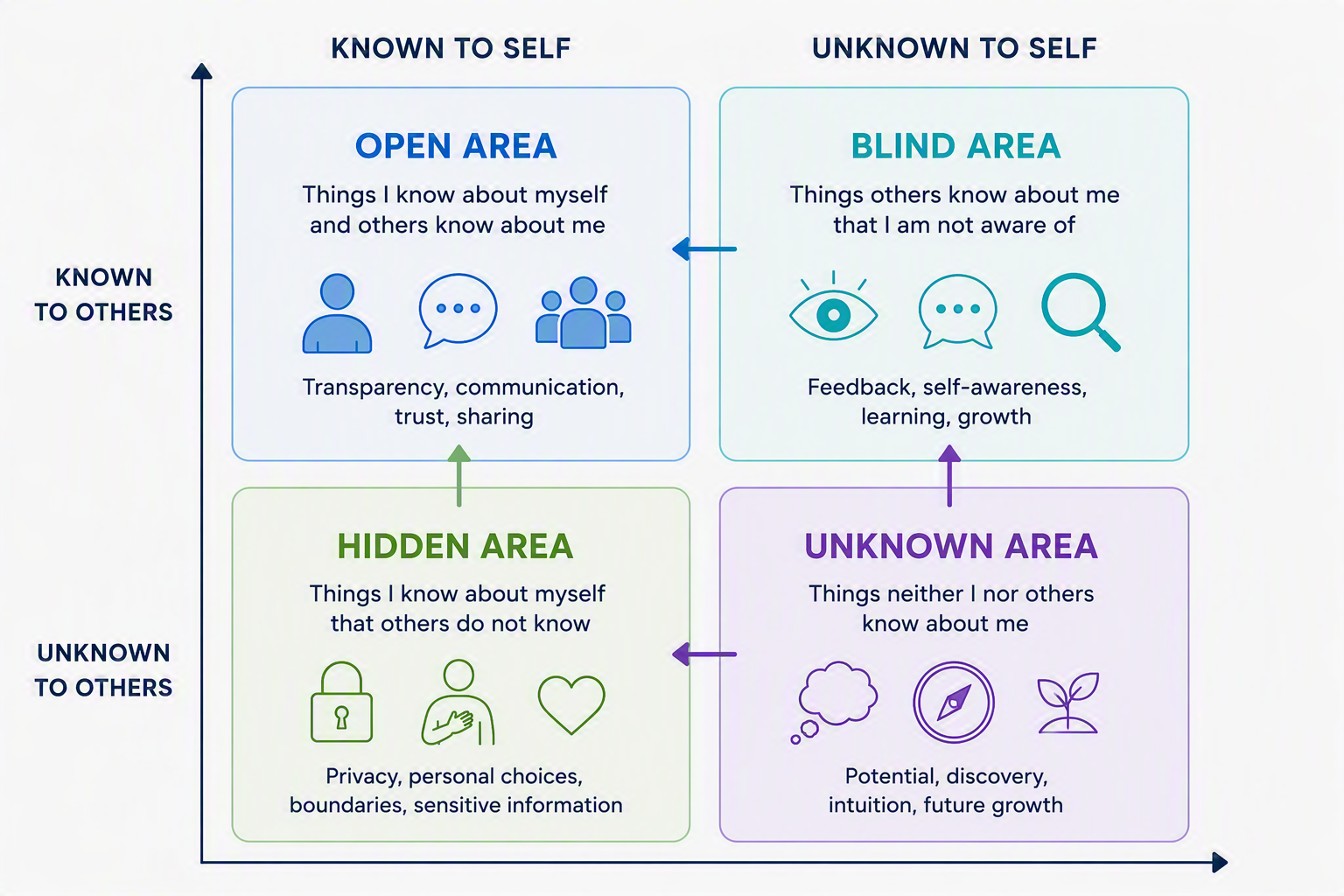
The Johari Window: A Powerful Tool for Self-Awareness
We spend a significant part of our lives interacting with others. Yet we are not always fully aware of how we are perceived, what we choose to reveal, or which aspects of our personality remain hidden from both ourselves and others.
Why do people sometimes see us differently than we see ourselves?
Why are we occasionally surprised by feedback from colleagues, friends, or family members?
How can we build stronger relationships and improve communication?
The Johari Window, created by psychologists Joseph Luft and Harrington Ingham, is one of the most widely used models in personal development, coaching, leadership, and communication. It helps individuals better understand themselves and the way they interact with others.
Its purpose is simple: increase self-awareness, strengthen trust, and improve relationships.
Understanding the Johari Window
The Johari Window is built around four areas that represent different levels of self-awareness.
These areas evolve over time through experience, communication, and personal growth.
1. The Open Area
The Open Area contains everything I know about myself and that others know as well.
This includes:
- visible skills;
- observable behaviors;
- shared information;
- aspects of my personality known by others.
The larger this area becomes, the easier communication and collaboration tend to be.
Trust and transparency naturally increase.
2. The Hidden Area
The Hidden Area contains information that I know about myself but choose not to reveal.
This may include:
- personal thoughts;
- emotions;
- fears;
- ambitions;
- doubts;
- private experiences.
This area is both natural and necessary.
However, when it becomes too large, it may create distance and limit trust within relationships.
3. The Blind Area
The Blind Area contains things that others can see about us but that we do not recognize ourselves.
Examples include:
- communication habits;
- behavioral patterns;
- leadership style;
- strengths we underestimate;
- unconscious behaviors.
This area often contains some of the greatest opportunities for growth.
Constructive feedback helps reduce blind spots and increase self-awareness.
4. The Unknown Area
The Unknown Area contains aspects that neither we nor others currently know.
This may include:
- hidden talents;
- untapped abilities;
- unexplored potential;
- future capabilities.
New experiences, challenges, coaching, and personal development often help uncover these hidden resources.
Why Is the Johari Window So Powerful?
One of the strengths of the model is its dynamic nature.
The more we communicate, seek feedback, and practice self-reflection, the larger our Open Area becomes.
This growth promotes:
- stronger self-awareness;
- healthier relationships;
- better communication;
- increased confidence;
- improved collaboration;
- greater leadership effectiveness.
The model reminds us that personal growth does not happen in isolation. Other people’s perspectives are often valuable sources of learning.
The Power of Feedback
Reducing the Blind Area depends largely on feedback.
Constructive feedback can reveal:
- strengths we overlook;
- behavioral patterns;
- communication habits;
- growth opportunities.
Feedback should not be viewed as criticism.
When delivered with respect and care, it becomes one of the most effective tools for development.
Learning to Be More Authentic
Reducing the Hidden Area is just as important.
Appropriate self-disclosure helps:
- build trust;
- strengthen relationships;
- encourage collaboration;
- improve engagement.
The goal is not to reveal everything.
The goal is to consciously share what helps create healthier and more authentic relationships.
How Coaching Can Help
Coaching provides an ideal environment for exploring your Johari Window.
It can help you:
- increase self-awareness;
- identify blind spots;
- better understand your impact on others;
- strengthen confidence;
- improve communication skills;
- develop leadership effectiveness;
- uncover hidden strengths;
- become more authentic.
Through structured conversations and reflection, coaching allows individuals to gain valuable insights into themselves and their relationships.
Sophie: Discovering Her Impact
Sophie has been a manager for several years.
She sees herself as organized, demanding, and results-oriented.
During a Johari Window exercise, she asks her team members for feedback.
She discovers that several colleagues perceive her as intimidating during meetings.
This surprises her.
Creating distance was never her intention.
As a result of this new awareness, Sophie gradually adjusts her communication style, practices active listening more intentionally, and shares her intentions more clearly.
A few weeks later, team members describe her as more approachable and collaborative.
The transformation did not come from learning a new technical skill.
It came from gaining a deeper understanding of herself.
Developing Your Relational Potential
The Johari Window reminds us that many of our greatest opportunities for growth are found in what we discover about ourselves through interactions with others.
By becoming more open to feedback, sharing appropriately, and exploring unknown potential, we strengthen both our relationships and our personal effectiveness.
AFIACOACH supports individuals, managers, executives, and teams who want to improve self-awareness, strengthen communication, and build healthier professional and personal relationships.
Would you like to better understand your impact on others and create more authentic relationships? Let’s explore your Johari Window together and uncover new opportunities for growth and development.