
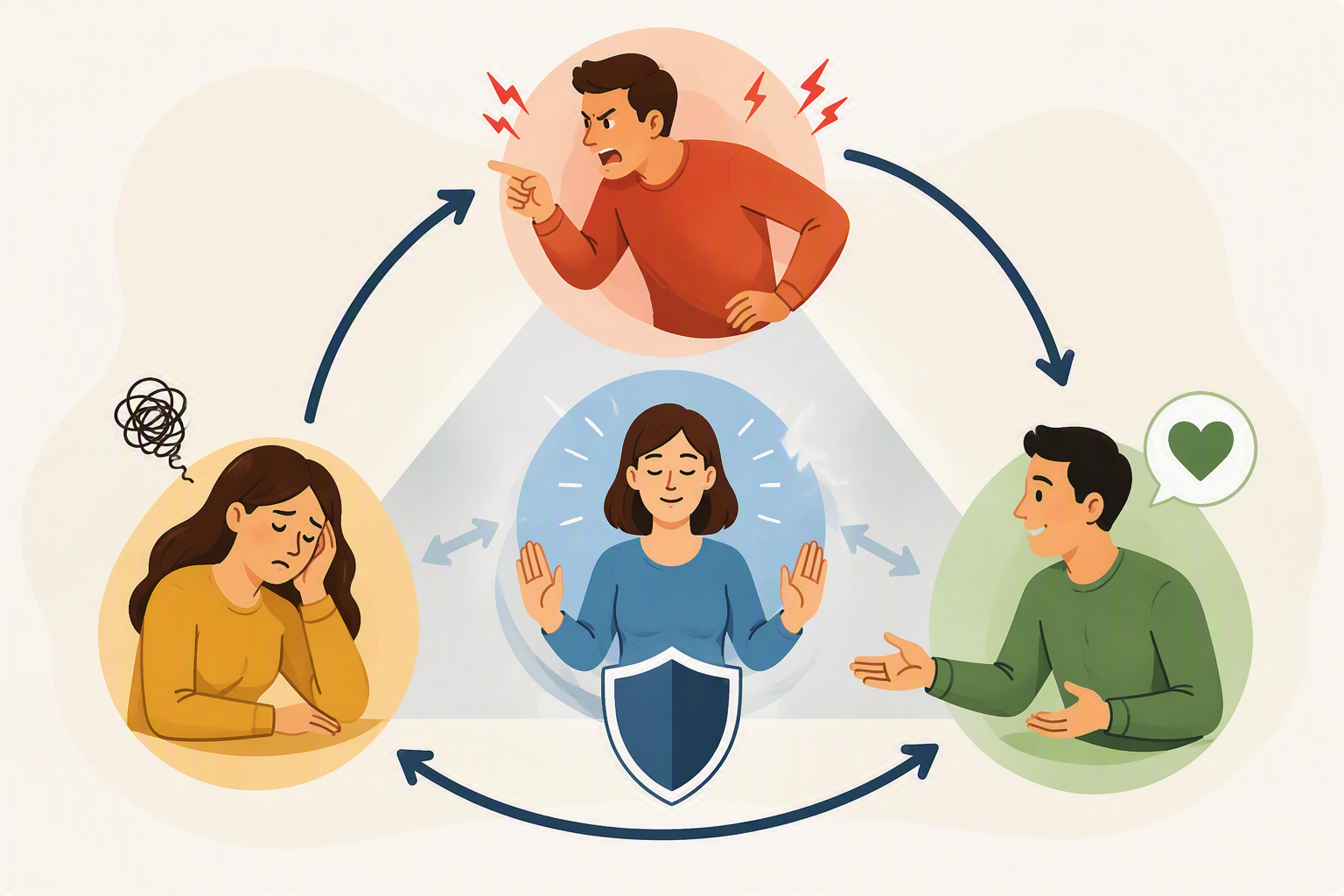
The Karpman Drama Triangle and Psychological Games
The three roles people unconsciously adopt in relationships and how to break free.
Some relationship patterns seem to repeat themselves over and over again. A discussion escalates into conflict, frustration builds, and people find themselves playing roles almost automatically.
Why do some interactions become so difficult even when everyone starts with good intentions?
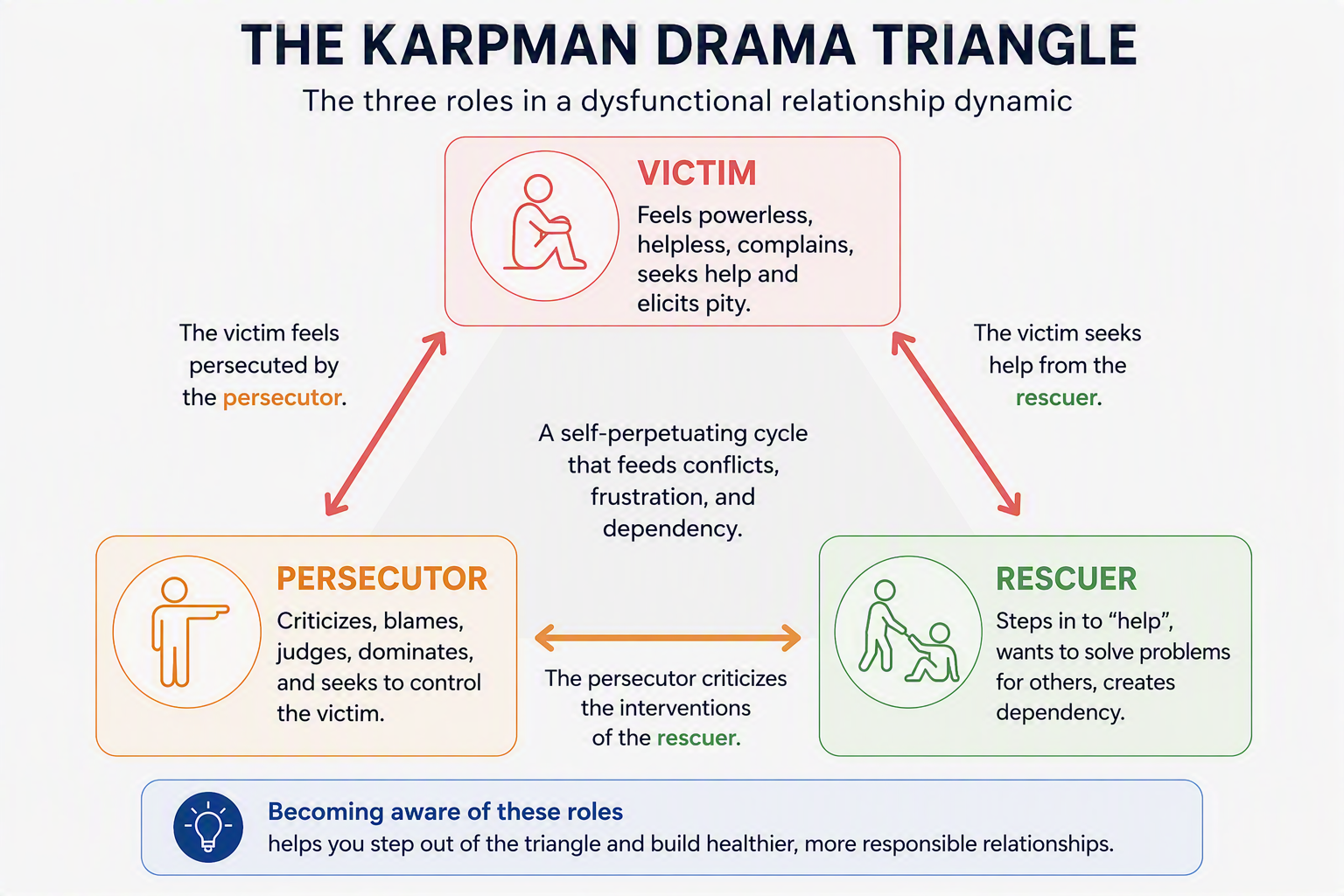
The Karpman Drama Triangle, developed by Stephen Karpman as part of Transactional Analysis, provides a powerful framework for understanding dysfunctional relationship dynamics. It describes three unconscious roles that people often adopt during psychological games: Victim, Persecutor, and Rescuer.
Understanding these roles helps improve communication, reduce conflict, and build healthier relationships.
The Three Roles of the Karpman Triangle
The Victim
The Victim feels powerless, stuck, or dependent on circumstances.
Typical thoughts include:
- “There is nothing I can do.”
- “It is not my fault.”
- “Nobody understands me.”
The Victim often seeks help, sympathy, or validation from others.
The Persecutor
The Persecutor criticizes, controls, blames, or dominates.
Typical behaviors include:
- judging;
- blaming;
- imposing opinions;
- diminishing others;
- applying excessive pressure.
Behind this role often lie frustration, insecurity, or a need for control.
The Rescuer
The Rescuer steps in to help, advise, or solve problems for others.
Although the intention is usually positive, the behavior can create dependency.
The Rescuer often thinks:
- “I will fix this.”
- “They need me.”
- “I have to help.”
Over time, this role can prevent others from developing autonomy and self-confidence.
Why Are These Roles Problematic?
The Karpman Triangle is particularly powerful because people frequently switch roles.
A Victim may become a Persecutor.
A Rescuer may become a Victim when appreciation is not returned.
A Persecutor may start feeling victimized.
The cycle then feeds itself and creates:
- conflict;
- frustration;
- misunderstandings;
- unhealthy dependency;
- workplace and personal tension.
These dynamics commonly appear in teams, leadership relationships, families, and periods of change.
Why Is It Important to Understand Psychological Games?
Understanding the Karpman Triangle helps people:
- recognize repetitive relationship patterns;
- escape limiting roles;
- improve conflict management;
- increase personal accountability;
- build healthier relationships;
- communicate more effectively;
- strengthen autonomy and cooperation.
Awareness is often the first step toward meaningful change.
Moving Beyond the Triangle: David Emerald’s Model
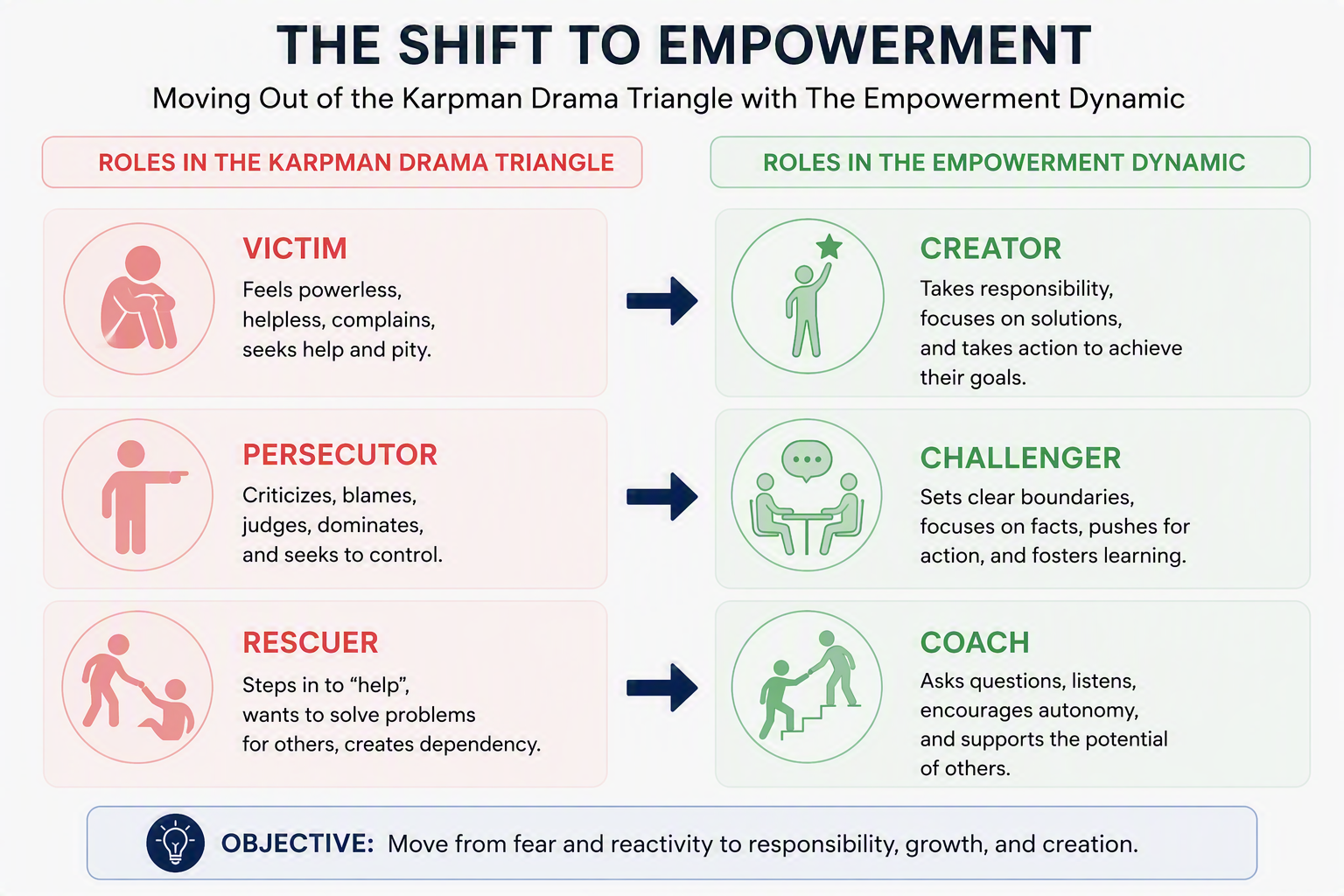
To create healthier interactions, David Emerald developed The Empowerment Dynamic.
This model replaces the drama roles with empowering and growth-oriented alternatives.
The goal is no longer to react to problems but to focus on creating solutions.
From Drama Roles to Constructive Roles
From Victim to Creator
The Creator no longer asks:
Why is this happening to me?
Instead, the Creator asks:
What do I really want to achieve?
Creators acknowledge challenges while focusing on solutions and possibilities.
They take ownership of their choices, actions, and results.
From Rescuer to Coach
The Coach does not solve problems for others.
Instead, the Coach asks questions, listens carefully, and supports reflection.
Rather than creating dependency, the Coach promotes:
- autonomy;
- accountability;
- skill development;
- confidence.
This mindset is especially valuable in leadership, management, and professional coaching.
From Persecutor to Challenger
The Challenger does not criticize to dominate.
Instead, Challengers encourage growth by establishing clear expectations and addressing reality constructively.
They:
- establish healthy boundaries;
- focus on facts;
- encourage learning;
- inspire action.
The Challenger helps others grow without diminishing them.
A 4-Step Action Plan to Escape the Drama Triangle
1. Identify Your Default Role
Pay attention to your behavior during stressful situations.
Do you tend to complain, criticize, or rescue others?
Awareness is the first step toward change.
2. Shift from Reaction to Intention
Before responding, pause and ask yourself:
What is my real objective in this situation?
This simple question helps interrupt automatic reactions.
3. Take Responsibility for Communication
Use “I” statements instead of blaming language.
Express your needs, expectations, and feelings clearly and respectfully.
This creates healthier conversations.
4. Change Your Internal Dialogue
Replace problem-focused questions such as:
Why is this happening to me?
With solution-focused questions such as:
- “What options are available to me?”
- “What can I learn from this situation?”
- “What is the first action I can take?”
Building Healthier and More Balanced Relationships
The Karpman Triangle reminds us that relationship difficulties are not only caused by others but also by the roles we unconsciously adopt.
The good news is that we can choose different roles.
By developing the mindset of a Creator, Coach, or Challenger, we can build more responsible, constructive, and balanced relationships.
AFIACOACH supports individuals, managers, leaders, and teams who want to improve communication, break free from psychological games, and create healthier professional relationships.
Do you feel trapped in recurring conflicts or relationship patterns? Let’s explore these dynamics together and develop more conscious, balanced, and productive ways of relating to others.